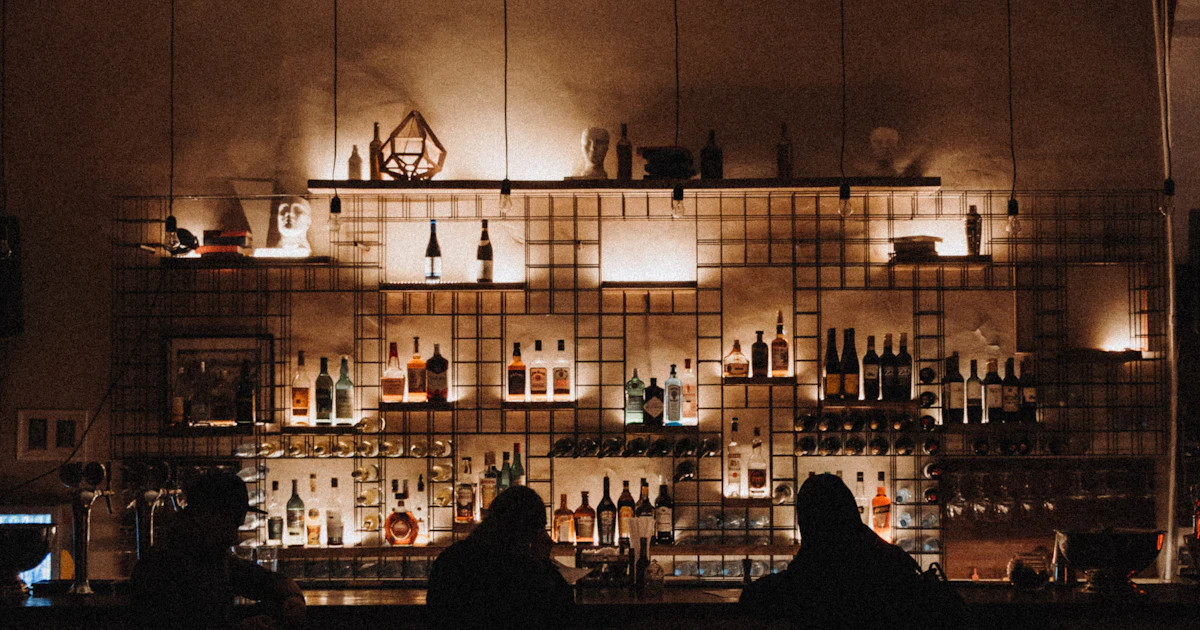
Dark bar interior with stools at the counter

For business

BrandBar for bars and restaurants

Supplying drinks for a bar, café or restaurant — faster, simpler and more profitable. Direct wholesale supply at producer prices, plus a free Cabinet with full control over stock, orders and analytics.

2001
production founded
80+
own SKUs
143
Epicentr stores carry our liqueur
25
brand items on Rozetka
4
access levels in the cabinet
1 click
export to accounting

Run the numbers

What the bar keeps on a single position

Pick the cocktail's ingredients from our catalog — bottle price and volume fill in on their own, you only enter the pour per serving. You get the cost per serving, the yield from a minimum purchase and the food cost. It is the same method we use across a full bar menu.

Pick a category and a product — bottle price and volume come straight from the catalog. Not on the list — choose “Custom” and type it in yourself.

IngredientBottle price, ₴Bottle volume, mlPer serving, ml
126 ₴
700 мл
480 ₴
700 мл
405 ₴
700 мл
Cost per serving61,46 ₴
Servings from the purchase14
Margin per serving118,54 ₴
Food cost34,1 %
Minimum purchase1 011,00 ₴
Revenue from the yield2 520 ₴
Net from the purchase1 341 ₴

Limits the yield: Vodka BLUE JAY VODKA 0.70 L 40%. The yield is set by whichever ingredient runs out first — the rest of the bottle stays available for other positions.

This is one cocktail. Across a full menu, positions share the same bottles — we split that honestly, with no double counting, and return the calculation free of charge.

Send the menu for a calculation

What it is and who it's for

We supply bars, cafés and restaurants — and give you a cabinet so ordering stops living in chats and spreadsheets. Your till and accounting stay yours: the Cabinet covers supply.

Restaurant floor with tables set for the evening

Bars and chains

The whole bar basket on one invoice: syrups, liqueurs, spirits. One order instead of calling three suppliers.

Warehouse shelving stacked with product boxes

Distributors

Your venues, their orders and their stock in one view. You see who has dropped out of their buying cycle before they leave for a competitor.

Crowd of guests at an open-air festival

Supply managers

Fewer follow-ups in chats: every order has a status, an owner and a history.

Cocktails lit by neon light on the bar

Venue teams

A bartender enters stock in a couple of minutes at the end of a shift — and that is all.

For business

Three places where money is sitting in your existing client base

The Cabinet does more than tidy up orders — it shows the sales rep who to call today.

01

Win back the ones who went quiet

A venue used to order every three weeks and has been silent for five. The Cabinet spots it and prepares a draft order — all that is left is the call.

02

Add to the basket

Alongside the required replenishment, the Cabinet suggests a relevant item or a better pack size — something the venue buys anyway but usually forgets.

03

Catch churn earlier

Purchase frequency and value have been sliding for a second month — visible in the Cabinet before the venue leaves for another supplier.

Commercial pilot

A pilot that can be measured

30–45 days, 1–3 venues. Before launch we put it in writing: who is responsible, what data we take, what we compare against, what counts as success, and the pilot price. Afterwards we measure the result with the same method, with no adjusting.

GMV per active venue Average order value Repeat-order frequency Gross profit Sales-rep minutes per order Follow-ups and errors
01

Responsibility

We configure the workflow and prepare the report. On your side: a manager who runs the orders, and confirmation that the result is real.

02

Data and access

We start from your file (CSV/XLSX) or manual entry. Before the import we agree exactly what data we take, who can see it, and how you export or delete it.

03

Success criterion

One number, chosen before the start: repeat GMV, average order value, or minutes spent per order. Not “it feels easier”, but a concrete threshold.

04

Human control

The Cabinet prepares drafts, but no order goes out without your person confirming it. Automation is switched on only once the workflow has proven itself.

05

After the pilot

The pilot ends with a report, not an auto-renewal. Anything further runs under a separate agreement — nothing is charged on its own.

Poster · Choice · BrandBar

Your till and accounting stay where they are

The Cabinet does not replace your POS or accounting — it covers supply: the order, its status, the stock. Data leaves as CSV, and specific integrations are discussed once your process is clear.

Straight talk about numbers

What we show

We do not put other people's logos and cases on the site without their permission. So what you see here is a demo on invented data. The real calculation we do for you: send your bar menu and we will cost the portions and yield on your own items.

Become a partner

B2B Cabinet

Stock, orders and delivery in one window

You see what is running out

The team enters stock at the end of a shift — the Cabinet flags every item that fell below its agreed minimum.

The order drafts itself

The Cabinet works out the reorder quantity and builds a draft. You review it and confirm.

History for every item

What was ordered, what arrived, what did not — without digging through chats and invoices.

Status without calling anyone

Every order: confirmed → on the way → delivered. The venue can check it any time.

Your data, on demand

Stock and orders export to CSV in one click and go straight into your own system.

Everyone sees only their own

The owner sees the whole network, a venue manager their venue, a bartender their shift. Venues never see each other's data.

An old fashioned cocktail on the bar counter
How it looks in the Cabinet
Grenadine: 0.8 L left of a 2 L minimum
The Cabinet built a draft order — just confirm it
Demo on invented data
Wine cellar with rows of bottles on the racks

Where money and time usually leak

01

The order lives in three chats

Phone, messenger and a spreadsheet give three versions of one order. A week later nobody remembers what was actually confirmed.

02

Nobody knows where the order is

The venue calls the manager, the manager calls the warehouse. In the Cabinet the status is visible without a single call.

03

Out of stock mid-service

The grenadine ran out at 9pm on Friday because nobody checked the level on Tuesday. The Cabinet flags the minimum in advance.

04

The network outgrows the process

Three venues still hold on a spreadsheet, ten do not. A shared overview shows exactly where it breaks.

05

Your data stays yours

Stock and orders export to CSV. Decide to leave and you take everything with you, carrying on in your own system.

06

Nothing has to change

Your till, menu and accounting stay as they are. The Cabinet slots into supply instead of making the whole venue migrate.

Your data stays yours

We get it: stock, sales and margin are trade secrets. That's why the Cabinet is built so only you control this data.

Access is segregated

Four access levels: a distributor sees only their network, an owner only their business, a bartender only their work. No partner ever sees another's data.

Passwords are never stored

The database holds only cryptographic hashes (bcrypt). Even we don't know your password — it can't be looked up.

Agreed data storage

Before the pilot, we record where data is stored, who can access it, its retention period, and how it is deleted or exported.

Encrypted connection

Data travels over HTTPS only; you sign in with a personal session token and end it with the “Log out” button.

How to start — 4 steps

1
1

Explore the Cabinet

View an example network and decide whether the workflow resembles your actual operation.

2
2

Show the current process

In a 20-minute call, we map how requests arrive and where delays appear.

3
3

Choose up to 3 venues

We set the range, owners, and one metric: time to first order, number of follow-ups, or emergency reorders.

4
4

Decide from evidence

After the first requests, we decide what deserves automation. Integrations and forecasting follow only a validated workflow.

Partnership terms

Logistics

A manager confirms dispatch timing, carrier, and delivery area for each request.

Assortment

Available items, pack sizes, and stock are recorded in the current price list or commercial offer.

Product

In-house syrups: the taste does not drift between batches, because every brew is checked against the same spec.

Commercial terms

Price, minimum order, payment, and documents are agreed before an order is confirmed.

Private label

Your brand on our production lines

Our automated lines in Sumy have been running since 2001. A chain, a distributor or a venue can release a drink under its own label — from recipe to finished packaging, without sourcing a separate plant or building production of its own.

1

Brief and recipe

Category, flavour profile, strength and packaging. If you have a reference product, we start from it.

2

Samples and tasting

We produce trial samples and adjust the recipe until the taste works for you. No run starts before this step.

3

Label and paperwork

Label design, mandatory markings and accompanying documents are prepared together, so the product is sellable from day one.

4

Production run

Bottled on the same lines as BrandBar's own brands. Volume and timing are fixed in the contract before launch.

Minimum run, lead time and development cost depend on the category, the packaging and how complex the recipe is — so we agree them for your specific product rather than quoting one number for everyone.

Discuss a private label
Where to buy syrups for a bar or café wholesale

Where to buy syrups for a bar wholesale

BrandBar offers venues its own syrups and an agreed range in other categories. A manager sends the current price list and confirms available items, pack sizes, price, minimum order, payment, and any contract requirement in writing before an order. Terms from one delivery do not automatically apply to later deliveries.

Syrups for a café: litre bottles built for rotation

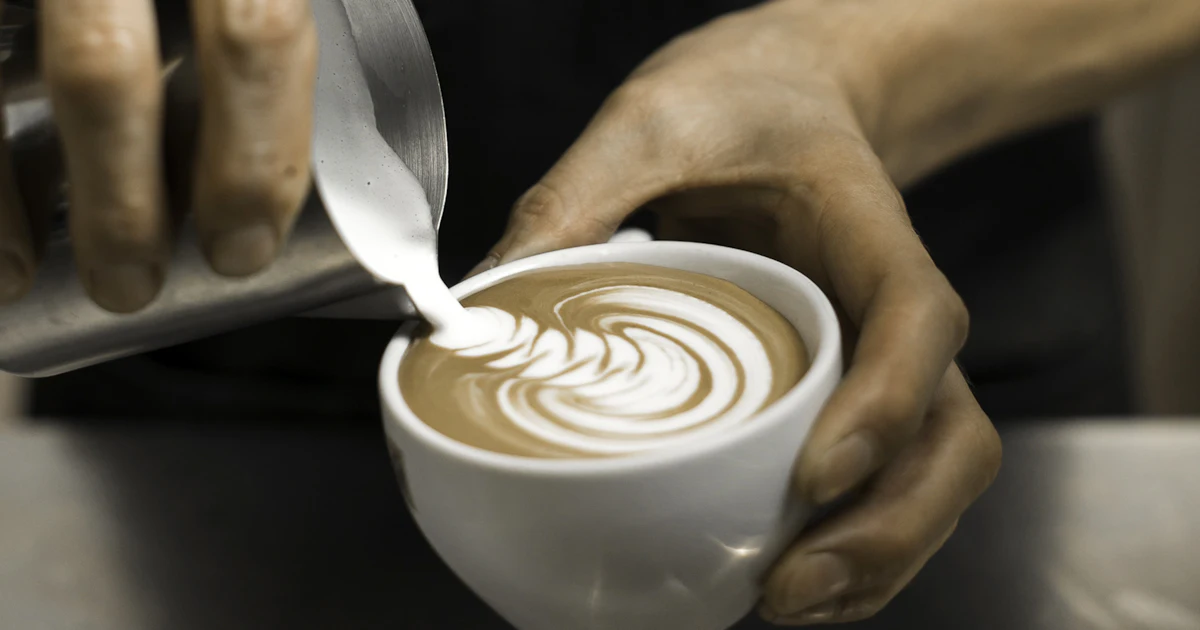
For coffee what matters is cost per serving and consistency rather than the length of the flavour list. The classic café line-up — caramel, vanilla, hazelnut, salted caramel, Irish cream — ships in litre bottles for a pump: one bottle gives roughly 60 servings at a standard 15–17 ml pour. Taste doesn't drift between batches: physical and chemical parameters are checked on every production run, so a latte made with your syrup tastes the same today and three months from now.

A drinks supplier for restaurants and bars

A manager confirms dispatch timing, carrier, delivery area, and estimated delivery date after checking stock and the address. Cabinet statuses reflect data entered by the team and do not replace carrier confirmation. The parties agree the source-document list and export format before ordering; the client verifies compatibility with its accounting system.

Who wholesale terms suit

Bars and cocktail rooms, cafés and bakery-cafés, restaurants and hotels, shops and retail chains, distributors, catering companies and event organisers, festival bar stations. For multi-site operators the “Network” plan applies: each venue runs its own stock, the owner sees every site on one map, and a bartender gets access to exactly the part their shift needs.

Questions about wholesale supply

Where can I buy syrups for a bar wholesale in Ukraine?

Leave a request on this page. A manager will send the current price list and confirm the range, service area, response time, and commercial terms for your venue.

What is the minimum first order?

The minimum value, case multiples, and price depend on the current price list and delivery type. A manager confirms them in writing before the first order is placed.

Which syrups should a café stock?

The fastest movers are caramel, vanilla, hazelnut, salted caramel and Irish cream — together they cover most of a coffee menu. Take litre bottles with a pump: that's around 60 servings per bottle at a 15–17 ml pour and the lowest cost per drink.

How long does delivery to a venue take?

A manager confirms dispatch timing and estimated delivery after checking stock, address, and carrier. A Cabinet status is an internal request status, not a guarantee of carrier timing.

Can we work without prepayment or a contract?

Prepayment, any deferred payment, credit limit, contract, and document flow require a separate commercial agreement. A website request does not itself confirm credit terms or supply without a contract.

Do you provide documents for the venue's accounting?

The parties agree the source-document list and legal details before ordering. The Cabinet supports CSV export; compatibility with a specific accounting system must be checked separately.

How much does the venue cabinet cost?

The demo is available for evaluation. Pilot pricing is fixed before launch; continued use, support, integrations, and automation are covered by a separate commercial offer and contract.

Do you supply festivals, catering and pop-up bars?

Yes. Each event gets its own access in the Cabinet: its own stock, its own orders and separate reporting that never mixes with the main venue. Dispatch is scheduled around the event date — leave a request and a manager will size the order to the expected number of guests.

Need a price list for your venue?

Leave your venue name and phone number — a manager will send the wholesale price list and work out the cost per serving for your menu.

Become a partner
A glass of Aperol on the bar counter

Become a BrandBar partner

Leave your details. In a short call, we will map your current request flow, choose up to three venues to start, and agree on the expected result.